
Source Electronics from China
From Shenzhen's Huaqiangbei — the world's largest electronics market — to the assembly lines of Dongguan. This is where hardware ideas become products.
Electronics Manufacturing in China
China produces over 70% of the world's consumer electronics. These are not evenly distributed across the country — they are concentrated in a handful of cities in the Pearl River Delta, each playing a distinct role in a supply chain that has no equivalent anywhere else on earth. Shenzhen handles design, prototyping, and high-value production. Dongguan runs high-volume assembly at lower cost. Guangzhou distributes finished goods and accessories through some of the largest wholesale electronics markets in Asia.
Within a 150-kilometre radius of Shenzhen, you can source every component needed to build a consumer electronics product — from ICs and sensors to injection-moulded casings, PCBs, battery cells, packaging, and final assembly. A hardware startup can go from concept to working prototype in under two weeks, a process that takes two to three months in the West.
China's Share of Global Production
Sources: Industry data, 2024–2025 estimates
Top Electronics Sourcing Cities
Ranked by supply chain depth, factory density, and export track record
Learn More About Each Sourcing City
Click a city to see what makes it a key player in the electronics supply chain
The hardware capital of the world — design it, prototype it, and mass-produce it within a single city
Shenzhen is where global electronics begins. Huaqiangbei, the world’s largest electronics components market, spans over 1.45 square kilometres in Futian district — dozens of multi-storey buildings including SEG Plaza (56,000 m²), Huaqiang Electronics World (43,000 m², over 2,800 shops), and Yuanwang Digital Mall, collectively housing tens of thousands of vendors selling everything from individual IC chips to finished consumer devices. But Huaqiangbei is the shopfront. The real power sits in the surrounding districts. Bao’an — particularly Shajing — is the PCB assembly centre of Shenzhen, home to a significant share of the city’s 2,000+ PCB companies. Longhua district hosts Foxconn’s largest global facility, a 3 km² campus. Nanshan district concentrates R&D, with Huawei, ZTE, DJI, and Tencent all headquartered here.
What sets Shenzhen apart is vertical integration compressed into a single metro area. Ninety percent of electronic components are available within 30 kilometres of the city centre. A hardware company can design a product in Nanshan, source every component from Huaqiangbei, prototype a working unit within two weeks, and begin mass production in Bao’an or Longhua — all without leaving the city. For importers sourcing consumer electronics, smart hardware, drones, wearables, LED products, or anything involving a custom PCB, Shenzhen is the starting point.
Shenzhen is where global electronics begins. Huaqiangbei, the world’s largest electronics components market, spans over 1.45 square kilometres in Futian district — dozens of multi-storey buildings including SEG Plaza (56,000 m²), Huaqiang Electronics World (43,000 m², over 2,800 shops), and Yuanwang Digital Mall, collectively housing tens of thousands of vendors selling everything from individual IC chips to finished consumer devices. But Huaqiangbei is the shopfront. The real power sits in the surrounding districts. Bao’an — particularly Shajing — is the PCB assembly centre of Shenzhen, home to a significant share of the city’s 2,000+ PCB companies. Longhua district hosts Foxconn’s largest global facility, a 3 km² campus. Nanshan district concentrates R&D, with Huawei, ZTE, DJI, and Tencent all headquartered here.
What sets Shenzhen apart is vertical integration compressed into a single metro area. Ninety percent of electronic components are available within 30 kilometres of the city centre. A hardware company can design a product in Nanshan, source every component from Huaqiangbei, prototype a working unit within two weeks, and begin mass production in Bao’an or Longhua — all without leaving the city. For importers sourcing consumer electronics, smart hardware, drones, wearables, LED products, or anything involving a custom PCB, Shenzhen is the starting point.
Where Shenzhen’s designs become the world’s products — China’s high-volume electronics assembly floor
Dongguan sits immediately north of Shenzhen and functions as the Pearl River Delta’s assembly engine. The city has over 220,000 industrial enterprises and a trillion-yuan electronic information industry cluster. It produces one-fifth of the world’s mobile phones. Key towns specialise sharply. Chang’an (population 664,000) handles electronic and electrical products alongside hardware components, sitting right on the Shenzhen border. Tangxia (population 482,000) focuses on electronic devices, home appliances, and precision machinery. Qingxi specialises in computers and accessories.
For importers, Dongguan is the right call when you need volume at competitive cost. If you are sourcing assembled consumer electronics, phone accessories, computer peripherals, cables, connectors, or anything that requires high-volume OEM/ODM assembly, Dongguan factories will typically quote lower than equivalent Shenzhen operations. The practical workflow: visit Shenzhen first to identify products and engineering partners, then source production quotes from Dongguan factories 30 to 60 minutes north. You get Shenzhen’s supply chain with Dongguan’s cost structure.
Dongguan sits immediately north of Shenzhen and functions as the Pearl River Delta’s assembly engine. The city has over 220,000 industrial enterprises and a trillion-yuan electronic information industry cluster. It produces one-fifth of the world’s mobile phones. Key towns specialise sharply. Chang’an (population 664,000) handles electronic and electrical products alongside hardware components, sitting right on the Shenzhen border. Tangxia (population 482,000) focuses on electronic devices, home appliances, and precision machinery. Qingxi specialises in computers and accessories.
For importers, Dongguan is the right call when you need volume at competitive cost. If you are sourcing assembled consumer electronics, phone accessories, computer peripherals, cables, connectors, or anything that requires high-volume OEM/ODM assembly, Dongguan factories will typically quote lower than equivalent Shenzhen operations. The practical workflow: visit Shenzhen first to identify products and engineering partners, then source production quotes from Dongguan factories 30 to 60 minutes north. You get Shenzhen’s supply chain with Dongguan’s cost structure.
One of China’s 3 largest electronics wholesale markets
Guangzhou is not Shenzhen — it’s not where electronics are designed or manufactured at scale. But it’s one of China’s biggest distribution hubs. Xidi Electronics Market in Liwan is one of the country’s three largest electronics wholesale centres. Dashatou covers mobile phone accessories. Gangding in Tianhe handles computers and IT equipment.
For importers, Guangzhou electronics makes sense for accessories, peripherals, and consumer gadgets rather than cutting-edge hardware. If you need custom PCB work or smart hardware, Shenzhen (30 min by train) is the right call.
Guangzhou is not Shenzhen — it’s not where electronics are designed or manufactured at scale. But it’s one of China’s biggest distribution hubs. Xidi Electronics Market in Liwan is one of the country’s three largest electronics wholesale centres. Dashatou covers mobile phone accessories. Gangding in Tianhe handles computers and IT equipment.
For importers, Guangzhou electronics makes sense for accessories, peripherals, and consumer gadgets rather than cutting-edge hardware. If you need custom PCB work or smart hardware, Shenzhen (30 min by train) is the right call.
China’s electronics import/export gateway and semiconductor R&D centre
Shanghai is not a factory city for consumer electronics, but it plays a critical role in the supply chain as China’s largest port and its semiconductor R&D hub. Zhangjiang Hi-Tech Park in Pudong hosts SMIC, China’s largest chip foundry, alongside hundreds of IC design firms. For importers, Shanghai matters for high-end components, automotive electronics, and industrial equipment.
The city’s strength is logistics and trade infrastructure. Yangshan Deep Water Port handles the largest volume of any port globally. If your electronics supply chain involves components from multiple PRD cities assembled and shipped internationally, Shanghai is often the consolidation point.
Shanghai is not a factory city for consumer electronics, but it plays a critical role in the supply chain as China’s largest port and its semiconductor R&D hub. Zhangjiang Hi-Tech Park in Pudong hosts SMIC, China’s largest chip foundry, alongside hundreds of IC design firms. For importers, Shanghai matters for high-end components, automotive electronics, and industrial equipment.
The city’s strength is logistics and trade infrastructure. Yangshan Deep Water Port handles the largest volume of any port globally. If your electronics supply chain involves components from multiple PRD cities assembled and shipped internationally, Shanghai is often the consolidation point.
E-commerce electronics hub — home to Alibaba and China’s digital supply chain
Hangzhou’s electronics story is digital-first. As the headquarters of Alibaba, it’s where 1688, Taobao, and Tmall are run from — the platforms that connect the PRD factories to global buyers. The city has a growing cluster of smart home, IoT software, and consumer tech companies in Binjiang and Yuhang districts.
For importers, Hangzhou is relevant when sourcing e-commerce-optimised electronics — products designed for online channels with built-in compliance for platforms like Amazon or Shopee. It’s not where hardware is manufactured, but where the digital logistics and cross-border e-commerce infrastructure lives.
Hangzhou’s electronics story is digital-first. As the headquarters of Alibaba, it’s where 1688, Taobao, and Tmall are run from — the platforms that connect the PRD factories to global buyers. The city has a growing cluster of smart home, IoT software, and consumer tech companies in Binjiang and Yuhang districts.
For importers, Hangzhou is relevant when sourcing e-commerce-optimised electronics — products designed for online channels with built-in compliance for platforms like Amazon or Shopee. It’s not where hardware is manufactured, but where the digital logistics and cross-border e-commerce infrastructure lives.
How to Source Electronics from China
Four ways to find electronics suppliers. Most successful importers use multiple approaches at different stages.
Search on 1688
1688 is Alibaba's domestic B2B marketplace — where Chinese factories trade with each other. For electronics, that means component pricing, factory-direct MOQs, and access to the upstream supply chain that Alibaba.com doesn't show you.
How to find electronics suppliers on 1688
Search in Chinese
Use product names in Chinese (e.g. 蓝牙耳机 for Bluetooth earphones, 充电器 for chargers). WorldFirst's AI Sourcing Agent translates for you.
Filter by electronics hubs
Set the supplier location filter to Shenzhen (深圳), Dongguan (东莞), or Guangdong (广东) province.
Check factory badges
Look for 实力商家 (verified merchant) and 源头工厂 (source factory) tags. For electronics, also check if they list SMT production lines.
Verify before paying
Cross-check the business registration. Pay through 1688 World Pay for CNY payment protection.
Trade shows for electronics
Going to Canton Fair?
Electronics, Machinery, Lighting
Consumer Goods, Home, Gifts
Textiles, Apparel, Food
The world's largest trade fair, held biannually in Guangzhou since 1957. Over 25,000 exhibitors across three phases.
Learn more about Canton Fair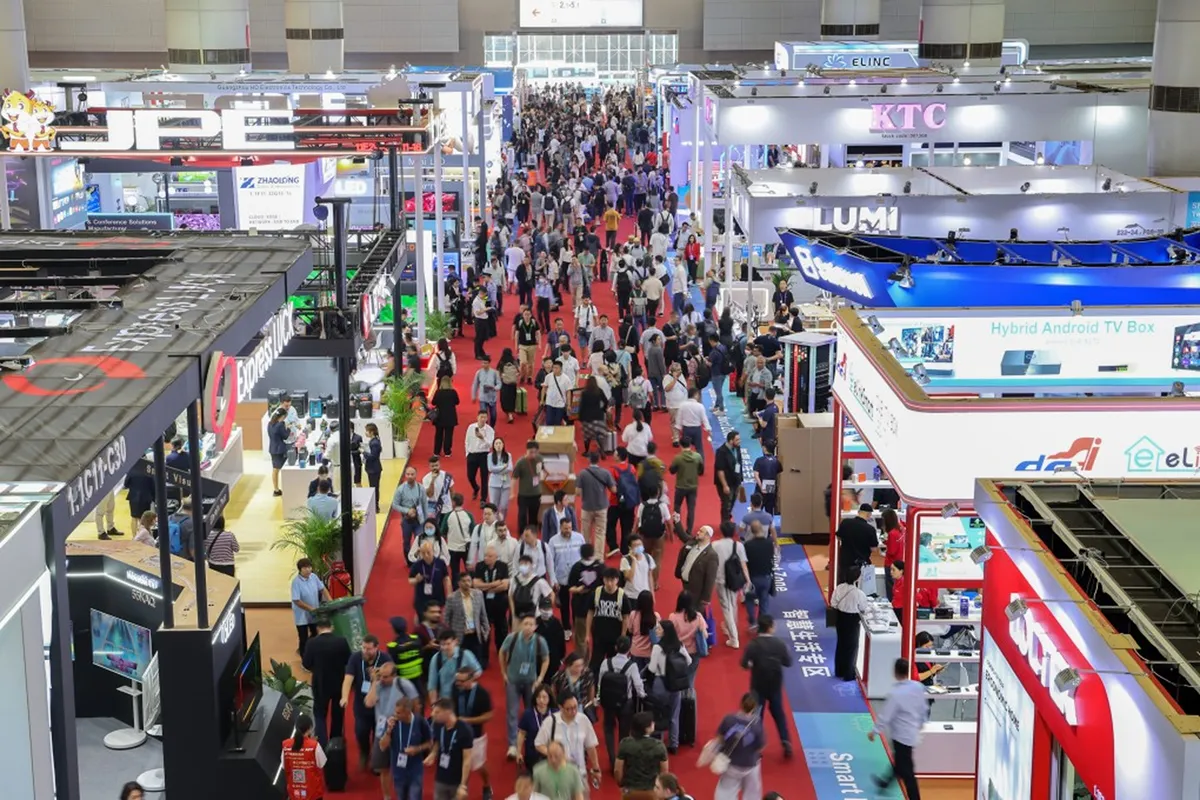
Countdown to
Canton Fair 2026 Spring
Other electronics trade shows 2026
Key exhibitions across China and Hong Kong for electronics sourcing
Hong Kong Electronics Fair (Spring)
Consumer electronics, components, mobile accessories
Global Sources Electronics
Smart home, audio, wearables, components
GILE Lighting Exhibition
All lighting — 3,200+ exhibitors
Canton Fair Phase 1 (Autumn)
Electronics, hardware, tools
Hong Kong Electronics Fair (Autumn)
Consumer electronics, components
Electronica China
Semiconductors, components, embedded systems
Electronics markets & factory districts
Unlike apparel or leather, electronics sourcing is less about traditional wholesale markets and more about concentrated factory districts and component markets. Here are the key locations across the Pearl River Delta.
Huaqiangbei Electronics Market
华强北电子市场
World's largest electronics market. Components, modules, off-the-shelf products. Every component for a consumer device within walking distance.
Best for: Components, prototyping, small-batch sourcing
深圳市福田区华强北路华强电子世界
SEG Electronics Market
赛格电子市场
10 floors of electronic components. ICs, LEDs, connectors, PCB materials. The go-to building for BOM fulfilment.
Best for: Specific component sourcing, BOM fulfilment
深圳市福田区华强北路赛格广场
Baoan Factory District
宝安工业区
Shenzhen's largest manufacturing zone. PCB assembly, smart hardware, consumer electronics factories at scale.
Best for: Custom electronics manufacturing, OEM/ODM
深圳市宝安区新安街道工业园区
WorldFirst verified electronics suppliers
These suppliers have been verified through WorldFirst's beneficiary check programme and maintain consistent trading performance in electronics manufacturing.
Shengda Electronics Technology
VerifiedConsumer Bluetooth audio, TWS earphones, smart speakers
Active since 2016 · High trading volume
Huawei Precision Components
VerifiedPCB assembly, SMT production, electronic modules
Active since 2014 · High trading volume
Rongxin Smart Hardware
VerifiedSmart home devices, IoT sensors, WiFi modules
Active since 2018 · High trading volume
Xincheng Power Technology
VerifiedPower banks, chargers, USB-C cables, adapters
Active since 2015 · High trading volume
Dongsheng Audio Equipment
VerifiedProfessional audio, amplifiers, studio monitors
Active since 2013 · High trading volume
Mingli LED Solutions
VerifiedLED displays, LED strips, lighting controllers
Active since 2017 · High trading volume
Download the China Sourcing Map
A 300+ page sourcing report covering 6 regions, 20 sourcing cities, and 24 product categories — built from real supplier data and WorldFirst's 150,000+ factory network. Free for importers.
- 20 city deep dives with industrial cluster maps
- 24 category guides with pricing benchmarks
- 6 regional shipping and logistics guides
- Supplier verification frameworks
- Payment protection and landed cost guides
Electronics Sourcing FAQ
17 answers organised by topic
Instant & Free Payments to Verified Suppliers
When both you and your supplier hold a WorldFirst account, payments are faster, cheaper, and safer.
Instant arrival
Between WorldFirst accounts, payments arrive instantly. No middleman banks, no waiting.
Zero transfer fees
No transfer fees between WorldFirst accounts. Keep more of your margin on every order.
Verified suppliers
We verify your supplier holds a valid business license and export license before processing your payment.
Instant arrival and zero transfer fees apply to payments between WorldFirst accounts. Standard international transfers are also supported.
No monthly fees · No minimum balance
Your Supplier Is Probably Already Here
WorldFirst is part of Ant International — one of the largest payment networks in Asia. Your money moves through local rails, not slow international wires.


With 150,000+ verified Chinese suppliers already on the network, chances are yours is too. When they are, payments arrive instantly with zero transfer fees.
How It Works
Add your supplier’s details
Enter their company name and Chinese bank account number. We verify it against their business registration before your money moves.
Lock in your rate
See exactly what you’ll pay in your currency. The rate you see is the rate you get — no hidden deductions.
Send and confirm
Hit send. If they’re on WorldFirst, they see it instantly. You get a confirmation — no more chasing on WeChat.
No monthly fees · No minimum balance
Source Smarter, Pay Safer
1.5 million businesses have used WorldFirst to pay suppliers since 2004. We've seen thousands of importers move from Alibaba to direct factory sourcing.
The ones who do well learn the cities first, verify their suppliers second, and sort out payments before wiring a deposit.
That's what this guide is for.
About WorldFirst